Is it time to buy a new MacBook, or are you looking for a new keyboard for your iMac?
When you search for these products, one specification we always state on the product page is the keyboard layout, that is, the way the keys are arranged, which varies depending on the country of distribution.
On Smart Generation® you can find a great many devices, coming from different countries around the world, with symbols and letters used in one language rather than another, different from the ones we are used to. Every listing on the site specifies the keyboard layout, with a dedicated symbol showing the flag of the country it belongs to.
All keyboards share some symbols (£, $, % ), while other characters are typical of the language they belong to. Not only does the presence of characters change depending on the country of distribution, but so does their position.
Let's take a closer look at them together!
Italian Layout
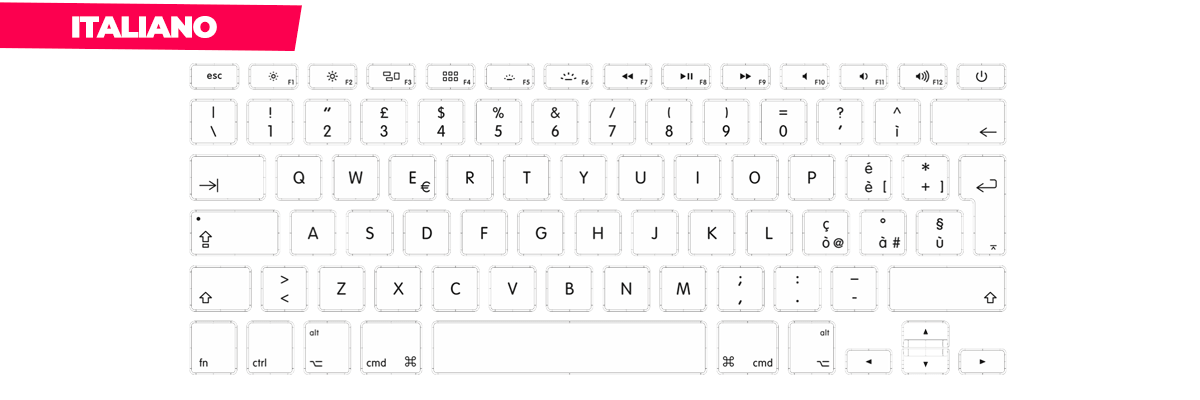
The Italian keyboard needs no introduction. A QWERTY type with its 105 keys, 5 of which are dedicated to accented vowels, and a short left shift key, it leaves little room for special characters, which can however be typed with simple key combinations.
International Layout
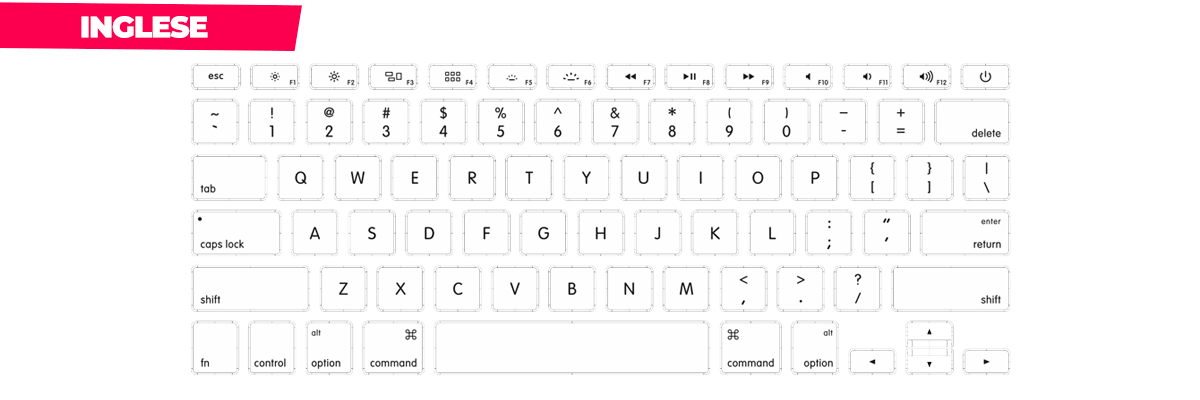
The international keyboard layout is the most common on the devices sold on our site. Under this category we group keyboards with UK and US layouts; they vary slightly from one another and are the best solution when the Italian layout is not available.
The layout of these keyboards is designed to make it easy to type characters typical of other languages too. Also QWERTY, it has no dedicated keys for our accented vowels (easily typed by holding down the desired vowel and choosing the desired accent, or simply by typing the apostrophe (’) followed by the desired vowel), offering instead a wide range of easy-to-find symbols and special characters to make the writing process simpler.
German Layout
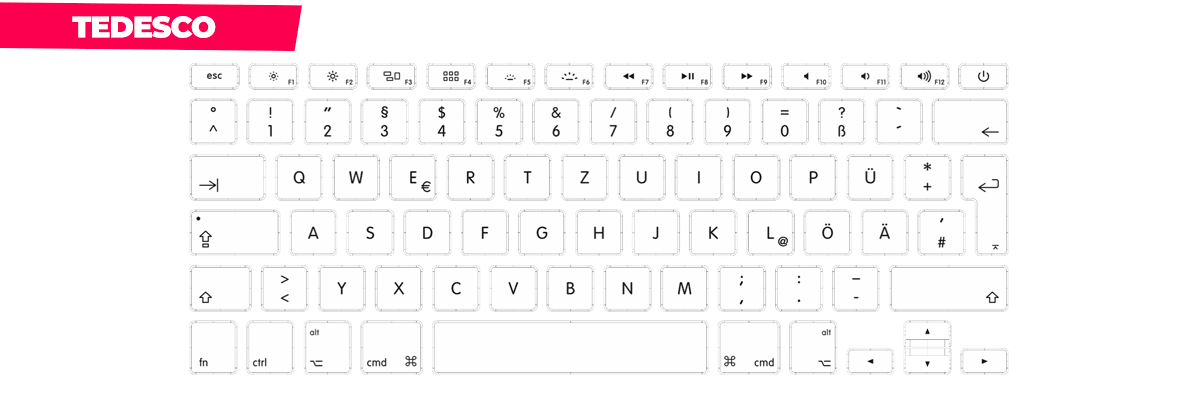
The German keyboard has a considerably different layout, as it is rich in accented letters and commonly used special characters. A QWERTZ type, it features the characters typical of the German language: our accented vowels make way for vowels with umlauts ( ä , ö , ü ), and the question mark key is shared with the ß (sharp s) instead of our apostrophe. The arrangement of the letters is the same as our layout, except for the swapped positions of the “Y” and the letter “Z”, a swap due to the frequent use in German of the letter “Z”, often paired with the vowel “A”.
French Layout
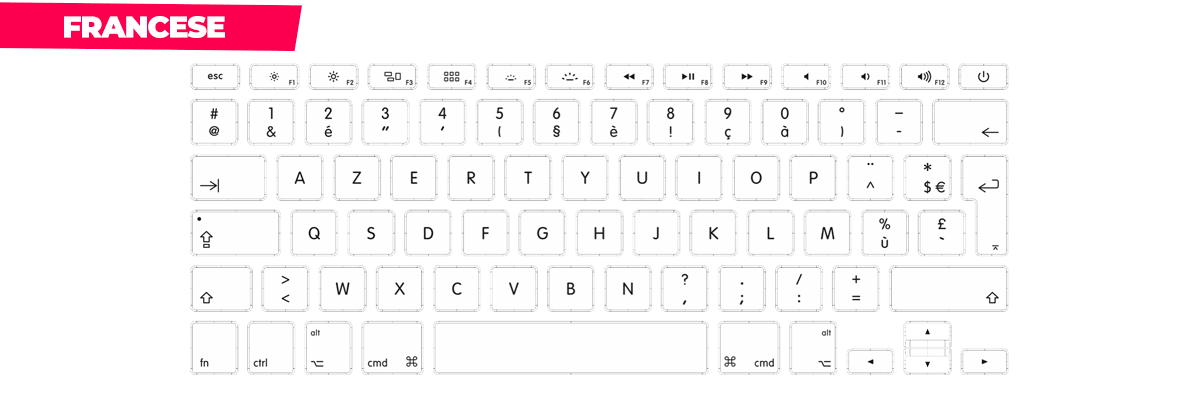
The French keyboard layout differs sharply from those described so far. An AZERTY type, its letters are positioned in a completely different way from what we are used to. Rich in special characters, new users consider it one of the hardest to adapt to.
Other Types of Layout You Might Come Across
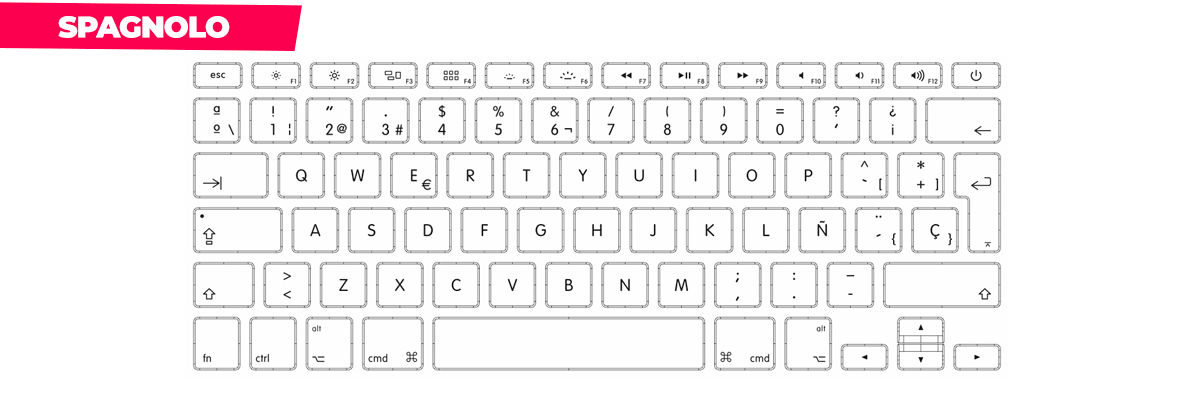
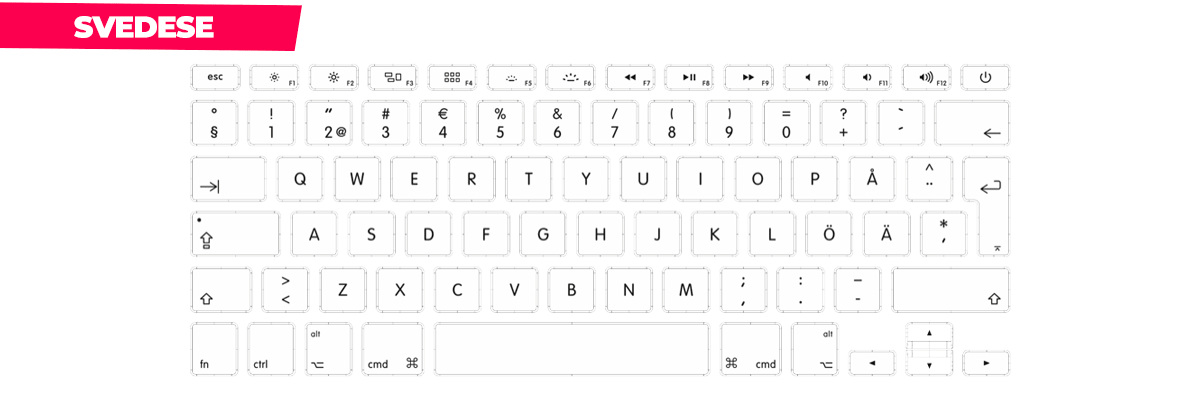
Whatever the keyboard layout, you can always customize the input sources through the device's system preferences, thus changing the function of the keys, which will follow the layout of the selected input source.
This, combined with applying a kit of professional stickers, on sale in our store, lets us change the layout visually too. Together, these two steps mean the device's layout need not be a barrier to buying it.